Carbon Accounting in High-Tech Manufacturing: Why the Data Problem Comes First
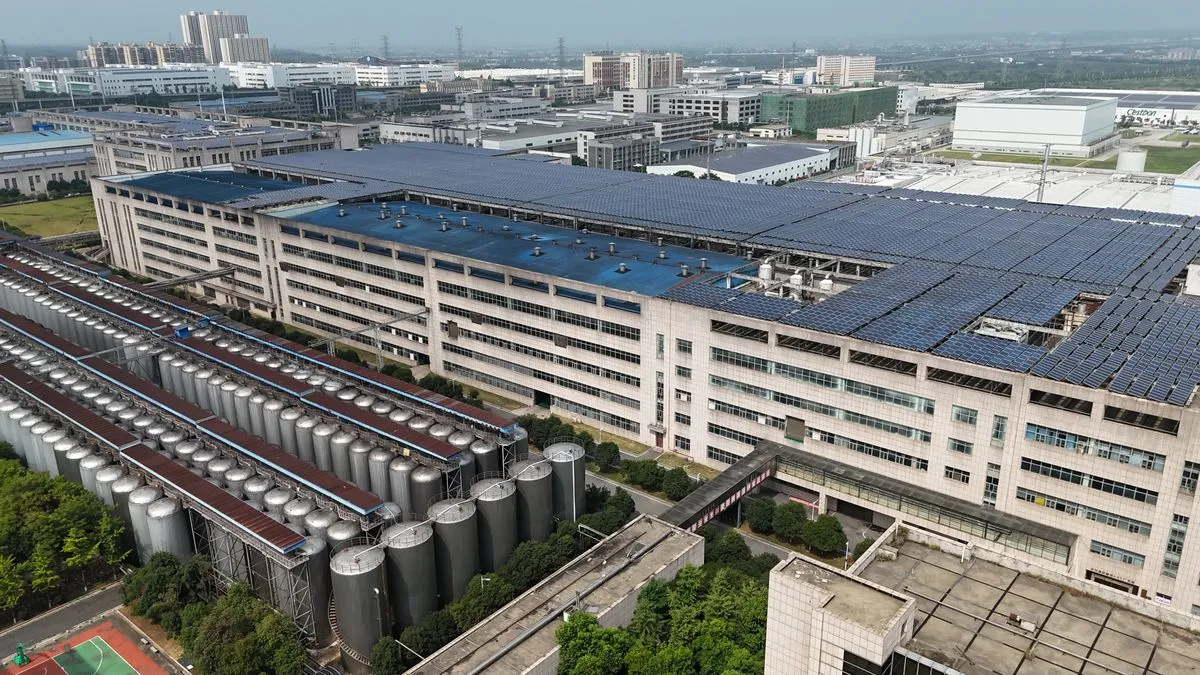
Carbon accounting used to be a CFO problem. In 2026, it has become an engineering problem.
The regulations (CSRD in Europe, SEC climate disclosure rules in the US, supply-chain due-diligence laws multiplying across jurisdictions) are forcing manufacturers to produce numbers they simply don't have yet. Not because the will is absent, but because the data infrastructure to generate those numbers accurately doesn't exist in most organisations. And in complex, high-tech industries, the gap between "we want to measure our carbon footprint" and "we can measure it reliably" is enormous.
What carbon accounting actually requires
Carbon accounting in manufacturing follows the GHG Protocol framework, which splits emissions into three scopes:
- Scope 1: Direct emissions from owned sources: furnaces, vehicles, on-site generation.
- Scope 2: Indirect emissions from purchased energy: electricity, heat, steam.
- Scope 3: Everything else in the value chain: raw materials, component manufacturing, logistics, product use, end-of-life.
Typical carbon footprint distribution · high-tech manufacturer
75%, Scope 3
Supply chain & materials
15%, Scope 2
Purchased energy
10%, Scope 1
Direct emissions
Scope 3 breakdown
* Indicative figures · actual split varies by industry and product type
For high-tech manufacturers, Scope 3 is the decisive scope. A surgical robot, an autonomous ground vehicle, a small modular reactor pressure vessel: the overwhelming share of lifecycle carbon sits in the supply chain and in embedded components, not in the final assembly hall. Studies consistently show 70–90 % of a complex hardware product's emissions are upstream.
Measuring Scope 3 accurately requires two things that most engineering organisations lack: structured data at every level of the manufacturing chain, and the ability to roll that data up to any granularity with confidence.
Why high-tech manufacturing is harder than it looks
The industries facing the steepest carbon accounting challenge are also the industries with the most complex product structures.
Robotics and humanoid robots. A collaborative robot arm may have 500–2,000 distinct components across mechanical, electronics, and firmware assemblies. Each component carries an embedded carbon footprint tied to its material, manufacturing process, and origin geography. When a motor supplier switches from stamped steel to sintered parts, the embedded carbon changes, and every robot that uses that motor needs to be recalculated.
MedTech. Medical devices carry regulatory traceability requirements (ISO 13485, EU MDR, FDA QMSR) that already demand exhaustive Bill of Materials management. Carbon traceability adds another layer: not just what components are used, but what emission factors apply to each, and whether those factors change between device revisions. The overlap between regulatory traceability and carbon traceability is large, but organisations running them in separate silos pay the data collection cost twice.
Nuclear energy. Nuclear programs operate over decades, with components qualified to stringent standards and supply chains that may span continents. Emission factor data for specialised nuclear-grade materials is sparse and must often be built from first principles. A small modular reactor program that starts carbon accounting in 2026 and runs to 2040 will need to track how emission factors evolve as the grid decarbonises, and how that propagates through their qualification documentation.
Aerospace and defense. Aerospace already lives with the most mature configuration management culture of any hardware industry. REACH, RoHS, and conflict-mineral reporting have primed aerospace teams for substance-level traceability. Carbon is the next column in that same table, but the sheer depth of multi-tier supply chains, and the pace of design changes on long-program aircraft and satellites, makes manual tracking intractable.
The data problem nobody talks about
Every carbon accounting conversation eventually hits the same wall: emission factors.
An emission factor is a coefficient that converts a physical quantity (kilograms of aluminium, kilowatt-hours of electricity, tonne-kilometres of freight) into a CO₂-equivalent mass. They come from databases (ecoinvent, the ADEME Base Empreinte, the EPA's emission factor repositories, industry-specific datasets) and they change constantly. The grid intensity of a French data centre in 2024 is not the grid intensity in 2026 after additional nuclear capacity comes online. The emission factor for primary aluminium smelted in Norway differs substantially from the same alloy smelted in China.
Managing emission factor data in manufacturing organisations today looks like this: an Excel file maintained by a sustainability consultant, updated once a year when someone remembers, disconnected from the engineering BOM. When regulations require audit-ready numbers, teams scramble to reconstruct which emission factor applied to which component at which point in the product lifecycle.
The result is numbers nobody fully trusts, audits that drag, and an inability to answer the most commercially important question: if we change this supplier or this material, what happens to our carbon footprint?
How Koddex changes the calculus
Emission factor update · live roll-up
Koddex is an Engineering Operating System: a structured data backbone where every element of the engineering chain, requirements, components, assemblies, tests, and baselines, lives as a typed, linked entity in a single graph. That architecture turns out to be precisely what carbon accounting needs.
A single data backbone for emission factors
Koddex lets teams model emission factor data as first-class entities in the same graph as their product data. An emission factor dataset (say, the ecoinvent entry for injection-moulded polycarbonate) becomes a versioned item with its own attributes: source database, geography, reference year, uncertainty range. Components in the BOM reference these items directly, as typed links.
The consequence: when a dataset is updated, the update propagates through every component and assembly that references it. No manual spreadsheet cascade. No audit gap. The emission factor applied to a given component at a given baseline is permanently traceable, replay-able for any auditor, and consistent across the entire product portfolio.
Carbon data attached to every level of the chain
Because Koddex models the full manufacturing chain as a DAG, from raw material to sub-assembly to top-level product, ESG attributes can be attached at any level of that hierarchy. A carbon intensity figure lives on a material item. A process energy consumption figure lives on a manufacturing step. A logistics emission figure lives on a supplier relationship.
This isn't a parallel spreadsheet mapping onto the BOM; it's the same graph. Which means the traceability that already exists for certification purposes (the link between a requirement, a component, a test, and a baseline) is the same graph that carries the carbon numbers.
For medtech teams already managing ISO 13485 traceability in Koddex, adding carbon attributes is incremental work, not a new system to buy and integrate.
Computed attributes roll up automatically
The architectural feature that makes this qualitatively different from any spreadsheet or standalone carbon tool is computed attributes.
In Koddex, an attribute on a parent node can be defined as a function of its children's attributes. A sub-assembly's total embedded carbon is the sum of its components' embedded carbons, each weighted by quantity and adjusted by the applicable emission factor. A product's Scope 3 footprint is the roll-up of its full BOM tree, computed live from the leaf-level data.
This means:
- You can compute carbon at any granularity (component, sub-assembly, product family, entire portfolio) without running a separate calculation tool.
- You can answer "what-if" questions instantly: change a material or supplier, see the carbon impact before the change is approved.
- Reports for CSRD or customer sustainability questionnaires are generated from live data, not assembled from stale exports.
One change, everything recalculates
The third capability is the one that matters most at scale: when any input changes, the entire graph recalculates.
A supplier updates their process, and you receive a revised emission factor. You update the factor in Koddex. Every component that references that factor, every sub-assembly that contains those components, every product in your portfolio: all recomputed, immediately, with a full audit trail showing the before and after.
This is the engineering operating system model applied to ESG. Not a sustainability module bolted onto a PLM. Not an annual survey sent to suppliers. A live, structured, auditable data layer that makes carbon numbers as reliable as the rest of your engineering data.
Where to start
The biggest mistake manufacturing teams make is treating carbon accounting as a reporting exercise rather than a data architecture exercise. The reporting is straightforward once the data is right. Getting the data right requires treating emission factors, carbon attributes, and ESG metadata with the same rigour applied to requirements and test evidence.
For most teams, the practical starting point is the BOM. If your Bill of Materials is already structured and maintained in a system like Koddex, you are closer than you think: the hierarchy is there, the component identities are there, and the traceability links are there. Adding emission factor references and computed roll-up attributes is an extension of what already exists, not a new project.
For teams still managing carbon in spreadsheets disconnected from engineering: the question to ask is not "which carbon accounting software should we buy?" but "do we have a data backbone capable of carrying this data?" If the answer is no, adding another tool won't close the gap.
The industrial teams that will produce credible, auditable, commercially actionable carbon numbers in 2027 are the ones building the data infrastructure in 2026.
---
If you're a hardware team working through carbon accounting obligations and want to see what attaching ESG data to a live engineering graph looks like in practice, request access to the Koddex onboarding program: three months of structured onboarding with dedicated support for your engineering data.