Leaving heavy-weight PLM systems: the Modern PLM Alternative Playbook
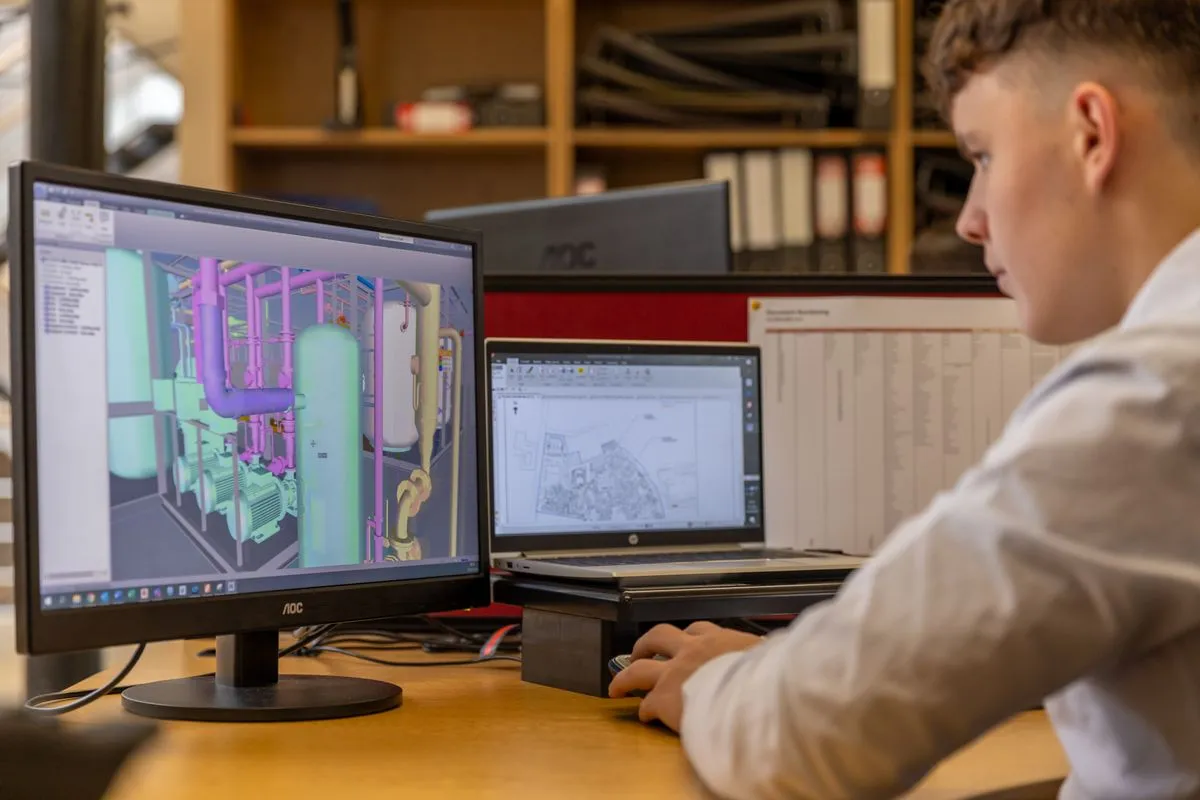
Most teams that "leave" their legacy PLM don't actually leave it.
They run it in parallel with five other systems, glue them together with reconciliation scripts, and live with the cognitive cost of remembering which system to update first. The legacy PLM eats budget without delivering the rigor it promised, and the patchwork around it eats engineering time without delivering the agility teams need.
The honest answer is that the modern alternative is not another PLM. It is a different category: an Engineering Operating System that owns the typed graph of requirements, BOMs, tests, baselines, risk items, and audit trail on one substrate. The PLM function (BOM, change control, CAD vault federation) becomes one face of what the Engineering OS provides, not the parent category. See the Modern PLM Alternative glossary for the formal framing.
Why legacy PLM is failing modern teams
heavy-weight PLM systems were built for the 1990s. The architectural assumptions they encode are obsolete:
- Centralized IT, on-premise cluster. Cloud-native is an afterthought, not a default. thick clients and VPN tunnels still ship.
- Waterfall workflow. Check-in / check-out implies a sequential lifecycle. Real teams iterate weekly.
- CAD-centric data model. Everything orbits the 3D model. Software, firmware, and AI subsystems get bolted on as second-class data.
- SOAP-era APIs. AI agents that want to act on the graph cannot. Modern integrations live in MCP, GraphQL, REST, not SOAP.
- Six-figure consulting onboarding. The "discovery phase" lasts six months because the configuration language is too rigid to fit a team's reality.
Retrofitting these assumptions costs more than starting fresh. Most teams know it. Few have known what to start fresh with.
What modern PLM actually means
Five properties define the category replacing heavy PLM in 2026.
Cloud-native by default. No on-premise cluster. EU data residency, SOC2 alignment, ISO 27001 in progress. Engineers log in from anywhere; IT doesn't run a parallel data center.
Computable graph, not files. BOM rollups, coverage, mass, and cost compute live on the graph. The check-in / check-out workflow is gone; real-time co-editing replaces it. This is what makes a real engineering backbone tractable.
Cryptographic baselines. Baselines are signed snapshots, not folder copies. Replay any past state for audit, or fork a branch for an iteration, Git-style.
Federated, not silo. Existing CAD, ALM, MES, ERP connect through the API. You don't migrate a decade of tooling; you give it a coherent backbone. This is the single biggest difference from a PLM replacement: federation, not displacement.
MCP-native AI access. AI agents query the same graph through MCP with scoped, auditable permissions. The future of automation is built in, not bolted on after a 2030 upgrade cycle.
The migration playbook
Teams that successfully transition from legacy PLM to a modern alternative follow a recognizable pattern.
Step 1: federate, don't migrate. Connect existing CAD, ALM, and MES into the new backbone first. Existing tools keep working; the backbone holds the typed structure. No big-bang migration.
*Step 2: move the active programs.* New product lines launch on the new platform. Legacy programs continue on the old PLM until natural sunset. The old system shrinks; the new one grows.
Step 3: collapse the reconciliation jobs. Once the backbone is the source of truth, the dozens of sync scripts that glued the old patchwork together start to disappear. Each removal frees engineering time.
Step 4: enable AI agents. With the typed graph in place, MCP-native agents pick up the propagation, audit-prep, and impact-analysis work that used to consume configuration engineers full-time.
Step 5: sunset the legacy PLM. Usually 18-24 months in, the legacy PLM has no active programs left. License renewal becomes optional. The decision to drop it pays for the entire migration.
This pattern works because each step delivers value independently. There's no "10-month-long migration with no payoff until cutover", the value compounds from week one.
What teams gain in real numbers
The teams that have done this shift report consistent outcomes:
- 70-90% reduction in onboarding time for new engineers. The new substrate is closer to a modern web app than a CAD client.
- 40-60% reduction in pre-audit reconstruction time. Because the audit trail is the data model. (See the dedicated piece on traceability software.)
- Half-elimination of reconciliation jobs within 12 months. The patchwork shrinks.
- AI agent automation that legacy PLM cannot support. This is increasingly the deciding factor for new programs.
The combined effect is a categorical advantage, not a marginal improvement. Teams stop benchmarking against their own past performance, they compete on a different operating layer.
See what a modern PLM looks like on your data
Koddex is the modern alternative because it is an Engineering Operating System, not another PLM. It owns the typed graph, requirements, BOMs, tests, baselines, risk items, audit trail, cloud-native, with signed baselines, real-time co-editing, MCP-native AI, open integrations. It connects to your existing CAD, ALM, MES, ERP, you don't migrate, you federate.
If your team is currently paying for a legacy PLM and a ticket-wiki-spreadsheet patchwork that exists around it, request access to the onboarding program. Three months of personalized setup, model definition, and white-glove support to take your team from the patchwork to a real engineering operating system.
You don't have to choose between rigor and modernity anymore.