EPR2, SMR: in new nuclear, certification is the critical path
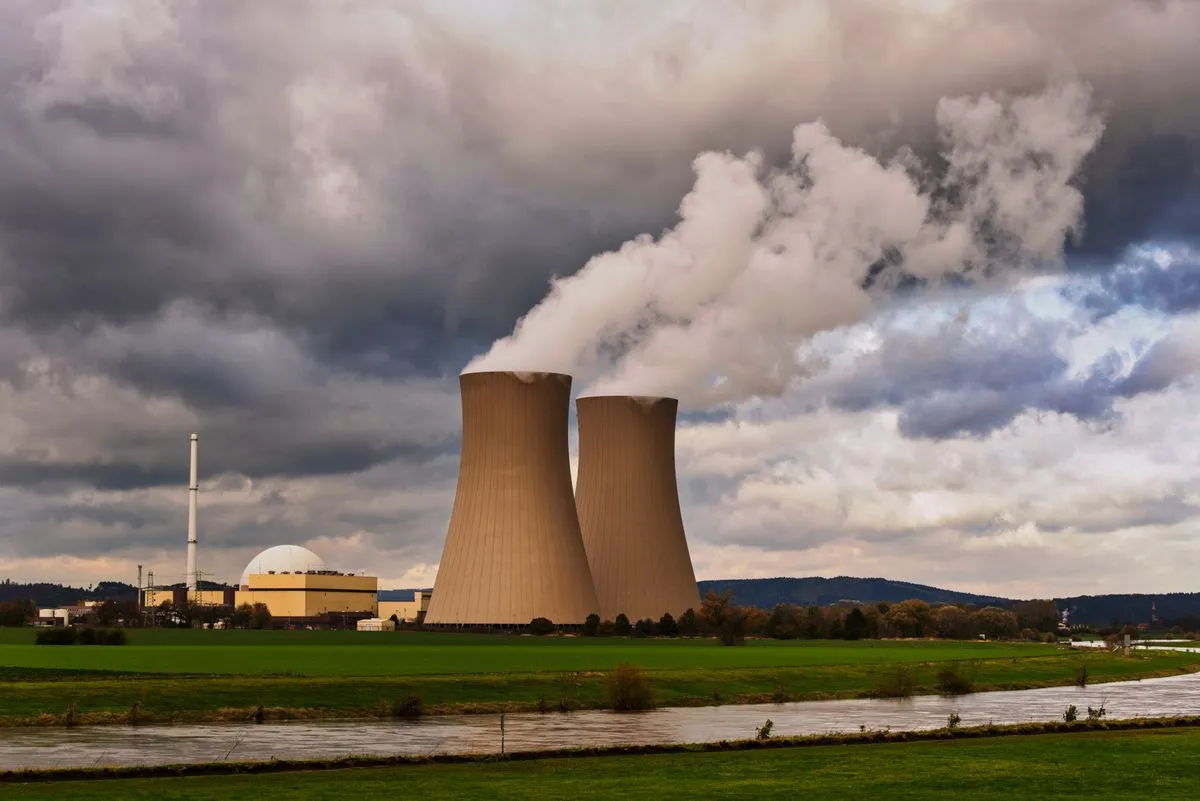
The year 2026 will be remembered as a turning point for French nuclear power. The cost estimate for the EPR2 program has been capped at 72.8 billion euros for the first six reactors, audited in the first quarter by the Délégation interministérielle au nouveau nucléaire. The final opinion of the Autorité de sûreté nucléaire et de radioprotection (ASNR, the French nuclear safety and radiation protection authority) on Penly is expected in the autumn, the creation authorization decree by the end of 2026, and EDF's final investment decision before year end, subject to Brussels validating the state support mechanism. On the innovative reactor side, the Conseil de politique nucléaire in March confirmed France 2030 support for the startups Calogena and Jimmy, which are entering the second phase of the "innovative nuclear reactors" call for projects with fundraising rounds where the state contributes 48 and 40 million euros respectively.
Meanwhile, across the Atlantic, Kairos Power is building the first authorized commercial American SMR, targeted for commissioning before 2030, while energy-intensive European manufacturers seeking decarbonized, dispatchable electricity are finding that no European SMR alternative will be available for a decade. The gap, as observers note, is widening at a pace Europe had not anticipated.
Hence a question that every founder, every CTO, every investor in new nuclear should ask themselves coldly: where is the race really being run? Our answer, forged in contact with players across the industry: it is run neither on neutronics, nor on thermal-hydraulics, nor even on financing. It is run on certification. And certification is, above all, a data engineering problem.
The real schedule of a reactor is its regulatory schedule
Consider the typical path of a French SMR or microreactor. Between concept and first concrete, a succession of regulatory milestones must be cleared: safety options file, review by the ASNR with support from the IRSN, creation authorization application, public inquiry, decree, then commissioning authorization. Each milestone rests on a dossier: thousands of pages of safety case, risk analyses, accident studies, specifications, design justifications.
Over a ten-year program, the regulatory review and the production of the associated dossiers represent the critical path in the majority of scenarios. This is not a French anomaly: it is the nature of the nuclear industry, where the burden of proof falls entirely on the operator. The EPR2 program itself illustrates the mechanism: without the ASNR opinion validating the overall safety options, from the thickness of the concrete to the backup systems, the program would remain stuck at the site preparation stage, regardless of the billions committed.
For a startup, this reality has a brutal consequence: the speed at which it can produce, evolve and defend its safety case determines its cash consumption and its credibility with investors. A review cycle that slips by eighteen months means tens of millions of euros in additional burn. Conversely, every month gained on the production of a dossier is a month of runway.
Why the safety case is a living system
The classic mistake is to picture the safety case as a document, admittedly an enormous one, but a document: you write it, you submit it, you wait. The reality is quite different. A safety case is a system of interdependent objects in permanent evolution.
safety case · one change, the ripple
A safety demonstration is not a document. It is a dense dependency graph in permanent motion.
Requirements
Architecture (SSC)
Safety studies
Evidence
At the base are the requirements: regulatory requirements, safety objectives, derived functional requirements, design requirements. Above them, the architecture: systems, structures and components (SSCs), classified according to their importance to safety, with their own requirements. Around them, the studies: deterministic analyses, probabilistic studies, hazard analyses, which justify that the architecture satisfies the requirements. And facing them, the evidence: calculations, tests, qualifications, operating feedback.
Together they form a dependency graph of extreme density. Modify one design parameter (a cooling capacity, a material, a redundancy) and you potentially invalidate dozens of studies, which justified dozens of requirements, which were broken down across dozens of components. Yet during the design and review phase, these modifications are a daily occurrence: responses to the authority's questions, cost optimizations, supplier feedback, changes to the regulatory framework itself.
The central operational question of a nuclear program is therefore not "do we know how to write the dossier?" but "with each change, do we know how to identify everything that is impacted, update it, and prove that overall consistency is maintained?". This is what the large incumbent operators do with armies of consistency engineers and documentary processes inherited from fifty years of practice. It is what a startup of 80 people cannot afford to do the same way.
The structural advantage of new entrants, on one condition
New nuclear startups like to recall their advantage: no legacy, lean teams, modern methods, native systems engineering. That is true, but this advantage has one condition to be realized: that the engineering is tooled to match the ambition.
The scenario we see too often is the following. For the first three years, the team designs quickly, with lightweight tools: calculation models, shared documents, requirements spreadsheets. It works, because everyone has everything in their head. Then comes the preparation of the first major regulatory milestone, and the discovery: requirements have proliferated without systematic traceability, studies reference divergent design versions, no one can produce the complete matrix that links each safety requirement to its justification. Rebuilding this traceability then mobilizes the best engineers for months, precisely when the authority begins to ask its questions.
The condition of the startup advantage is therefore to build from the outset what we call the certification repository: a single graph where requirements, design elements, studies and evidence live, with their satisfaction and justification links, versioned. In this model, answering an ASNR question begins with a query, not a meeting. Assessing the impact of a design change on the safety case takes minutes. And producing a milestone dossier becomes the extraction of a dated state of the repository.
This is exactly what Koddex was designed for: a graph-based Engineering OS, built for the industries where certification traceability is not a luxury but the very substance of the product. Nuclear is the limit case: nowhere else is the ratio between justification engineering and design engineering so high.
The equipment supplier base is concerned just as much
The reasoning does not apply only to reactor designers. The EPR2 program and the SMR programs will feed an entire chain of equipment suppliers: boilermaking, valves, instrumentation and control, civil engineering, handling. For these suppliers, often mid-sized companies, nuclear qualification is both a barrier to entry and a source of rent: frameworks such as the RCC-M or specific quality requirements (arrêté INB, EDF requirements) demand documentary mastery that few competitors can offer.
But this rent has a maintenance cost that explodes with the announced ramp-up. Six EPR2 units, plus the SMRs, plus the grand carénage (major refurbishment program) of the existing fleet: qualified suppliers will have to handle more contracts, more nonconformities, more deviations, more documentary changes simultaneously than ever before. Those who manage their traceability with binders and file servers will saturate, and saturated traceability in nuclear translates into production stoppages and loss of qualification.
Here too, the answer is architectural: turn the documentary bundle into a view of a structured repository, where each customer requirement, each work instruction, each report and each deviation is a connected object. The ramp-up of the industry will be won by the suppliers whose documentary engineering keeps pace with the workshop.
What 2026 teaches us
Three lessons emerge from the industry's news.
First lesson: regulatory milestones structure everything. The sequence of ASNR opinion, decree, final investment decision of the EPR2 program shows that even for the most powerful player in the industry, it is the regulatory demonstration that sets the tempo, not the technology nor the financing.
Second lesson: public support rewards execution credibility. The startups selected for phase 2 of France 2030 were chosen for their ability to demonstrate a controlled trajectory toward authorization. The quality of the engineering repository is an asset in due diligence, just like intellectual property.
Third lesson: the competitive window is narrow. With American players already building and European manufacturers waiting for solutions, every year counts. The competition between SMRs will not be won on the most elegant concept, but on the first one to cross the regulatory tunnel without losing its treasury along the way.
Conclusion: investing in the machine that proves
French new nuclear has the concepts, the talent and now the financing. What will separate the projects that succeed from those that get bogged down is the ability to industrialize the production of proof: turning each design decision into traceable justification, each change into controlled impact analysis, each milestone into an extraction rather than an epic.
This ability is called an engineering repository, and it is built at the start of the program, not on the eve of the first dossier. For an industry that loves critical-path metaphors: in new nuclear, the critical path runs through your data. Best to put it on rails right now.
Sources
- EDF shares its forecasted cost estimate of the EPR2 programme for €72.8bn (EDF, December 18, 2025)
- Programme EPR2 : un plafond à 72,8 milliards d'euros pour les six premiers réacteurs (Sfen, December 19, 2025, updated January 6, 2026)
- Réacteurs EPR2 de Penly : l'ASNR achève la phase d'expertise de la demande d'autorisation de création (ASNR, January 23, 2026)
- Cinquième conseil de politique nucléaire (Élysée, March 12, 2026)
- EPR2, Aval du futur, RNR… les cinq avancées du Conseil de politique nucléaire (Sfen, March 13, 2026, updated March 17, 2026)
- NRC Approves Construction of First Electricity-Producing Gen IV Reactor in the U.S. (POWER Magazine, November 20, 2024)
Koddex is the graph-based engineering repository for certified industries: requirements, design, studies and evidence connected end to end. Let's talk about your authorization trajectory.