Events
Our Euro Industries talk is online: how to bring AI into the design of certified hardware
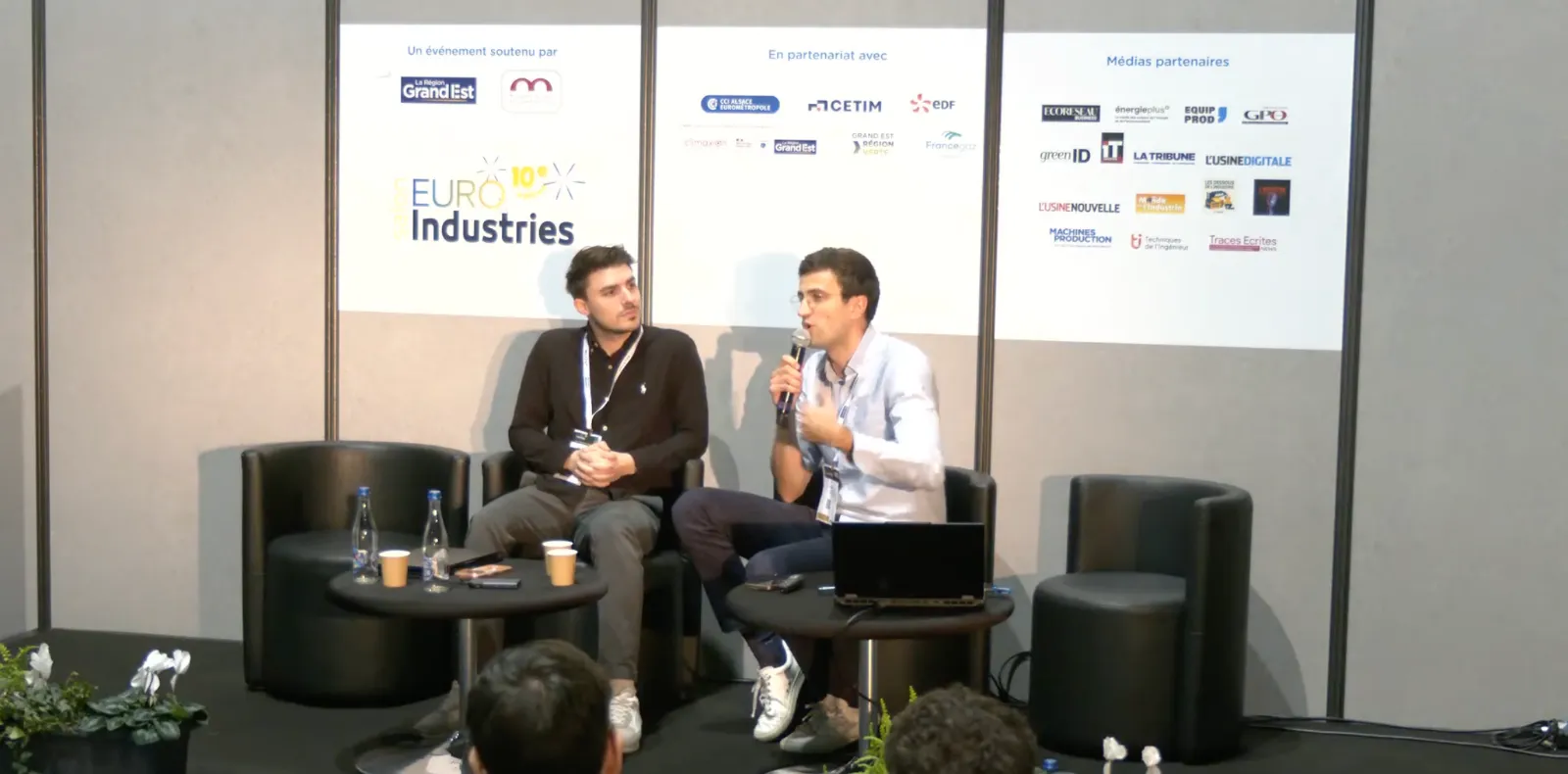
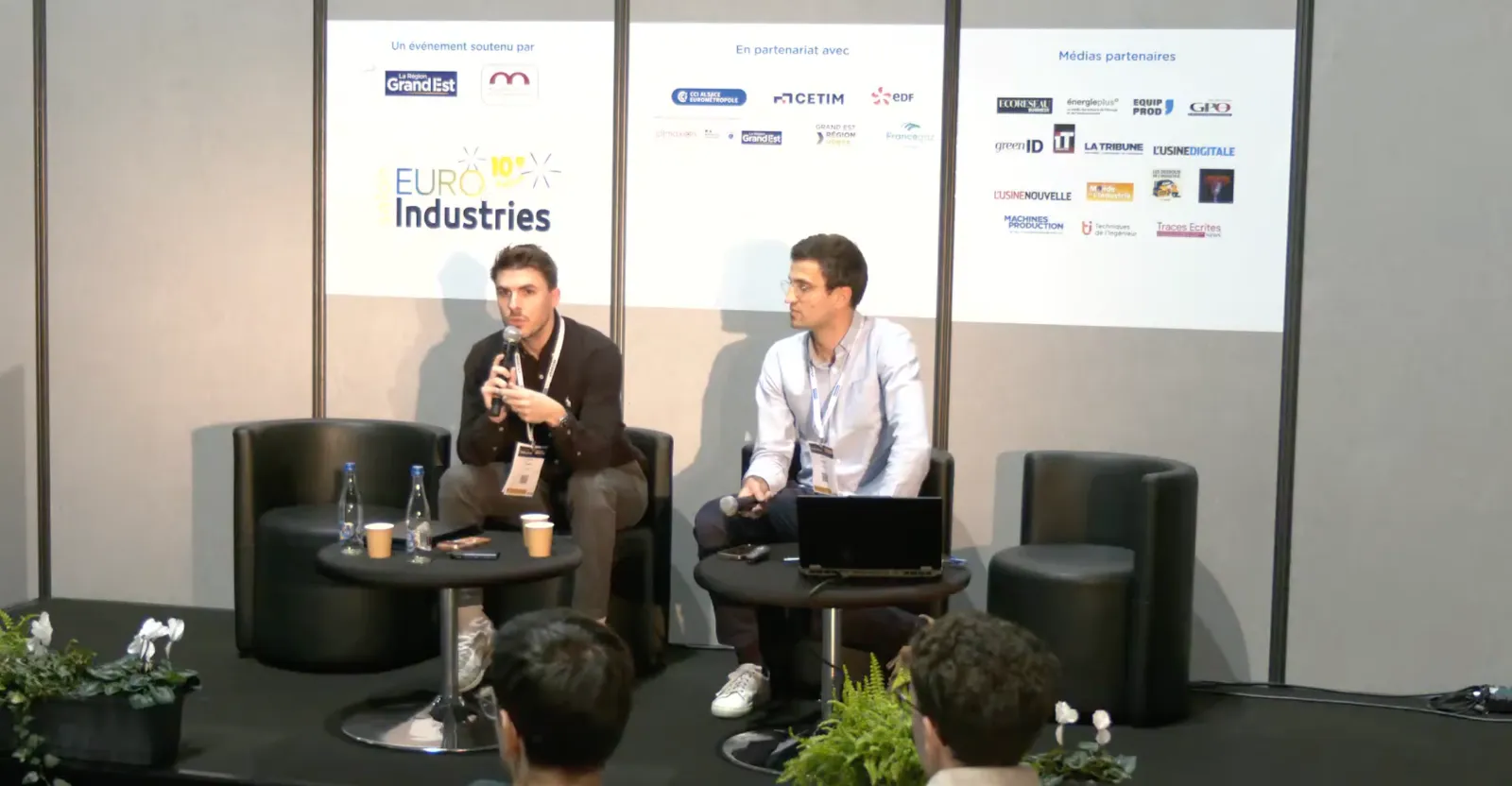
On 17 November 2026, at Euro Industries in Mulhouse (the 10th edition of the show, at the Parc Expo), our Head of Revenue Thomas Aubert and our Product & Customer Success lead Valentin Houssin took the Salle Mercure stage for 15 minutes on one question: how do you bring AI into the design of certified hardware without losing the rigor that certification demands?
The show filmed the session. The replay and the presentation deck are on a dedicated page.
Watch the replay and get the deck
The pains we hear, and what AI adds to them
Talking with manufacturers in robotics, nuclear and renewable energy, we keep meeting the same picture: siloed tools, and data that does not travel from design to deployment. Requirements and standards end up in spreadsheets, emails, shared drives and documents, where they lose their form. Our thesis is that rigor in data modelling is essential, and not only for AI: it is how you design faster, answer an audit or a customer requirement, and keep standards and requirements linked to the certified hardware.
AI can solve part of this. On regulated hardware it also brings problems of its own. Rights, because sensitive data cannot be left to a model to do anything with. Cost, because it is easy to spend tokens on a powerful model to structure and interpret data. And partial traceability, because an engineer using a language model in a corner leaves nothing linked behind. The result is often output that is hard to exploit.
What we built: an operating system for engineers
Koddex is an operating system for engineers who work on regulated hardware: the platform where they work every day, where the company's data is structured, and where they collaborate with AI agents. Technically, it is a semantic graph of your business processes. The company models its processes in Koddex, and every piece of data is linked to the others: a requirement to a component, a component to a supplier, and so on. Engineers work in it, and so do the transverse functions that contribute to the product.
Everything is linked, traced and versioned. Valentin comes from software, where this is how things work: a change in the code is traced, you know who made it and when, and AI works well there precisely because it runs on a versioned base. We brought that to hardware, with what engineers need on top of the graph: workflows, because building a product is a sequence of steps; impact analysis, because when a part of the graph changes you can list every component affected; baselines and revisions, because a certified part is frozen and the next change becomes a revision; and dashboards.
Three kinds of agents
Systems and hardware engineers earned their degrees to design, not to produce paperwork. In Koddex, AI speeds their work in three ways.
- Documentation
- Impact analysis
- Test plans
- Find a datum
- Triage documents
- Quick answers
- A standard changed?
- A requirement changed?
- Still compliant?
- A colleague. An agent formatted for an engineering job, with a daily mission: documentation, impact analysis, work done beside the engineer.
- An assistant. The closest to the prompt you know from a language model: quick answers, finding a datum, triaging documents.
- A background agent. For instance a check before a deployment that no standard or requirement has changed since the design was validated. The data is alive, engineers and agents work on it, and that update has to be verified before a deployment or a release of the hardware.
How an agent is configured
Agents are configured with missions, rules and rights, like the users of the company: read or edit rights, the part of the stack they may reach (only the PLM data, or the ERP, or the CRM), the model they run on, and a credit dashboard, because consumption goes fast and you want the right model power for each request, and to know which agent consumes what, and why.
In the field
- The deployment of a complex system. With Exotec, in robotics, we worked from the tender response and the first quote, through the detailed design of the warehouse, to the deployment on site. We measured about 10% saved on on-site deployment time, which is what costs the most: a logistics site at a standstill, and dozens or hundreds of people assembling.
- An obsolescence. A component or an embedded software is obsolete. A new revision of the component is created, and the agents rerun the test plans and check that the new part still meets the initial requirements. AI is not magic, some points still need an engineer, but 70 to 80% of basic verifications (is the mass of the part above so many kilograms, what is the embedded power) can be validated that way, so the engineer focuses on what needs attention.
- A tender response in a design office. A workflow with steps. An agent extracts the requirements from the customer's PDF and structures them the way the company wants, on a cheap model, since reading a PDF is cheap. The engineer validates, perhaps with a few changes. The next step launches another agent whose mission is to write the test plans for those requirements, the way the company writes test plans. And so on, down to the design or the deployment at a customer.
The stance behind all three: AI is not magic. It collaborates with the engineer, who checks its work, because these are complex products with regulation and audits. Agents generate data inside the engineer's tool and processes, and the data stays alive and up to date for everyone in the company.
Two questions from the room
Confidentiality: where do the files go? Koddex can run its own agents on AWS Bedrock, with sovereign hosting in Germany, or use the customer's own API key, so the model runs where the customer decides and the data stays with them. Governance also applies down to components, standards and requirements, so part of a system can be shared with a customer or a supplier while the rest stays private. Every engagement is under NDA.
Where does Koddex start and stop? For an existing product, the requirements and the components with their specifications are in Koddex. Change a component and Koddex tells you which requirements the new specifications still meet and which they no longer do, with every version kept. For a new product, Koddex does not design the bill of materials for you. With a design office that already had its inventory in Koddex, an agent drafted a first bill of materials from the requirements, and the engineers took it from there.
Where to start
One scope: a product, a reference base, a team. One linked dataset: requirements, BOM and tests in a graph, from your PLM, ERP or documents. One first task delegated to an agent under human review: matching a bill of materials with requirements and standards, or an impact check before a deployment. That is Valentin's job every day: on site with the customer, understanding their processes and integrating them in Koddex, with the right rights and the right amount of memory for each agent.