News
Before the FAT, agents check every system against the project as sold
A deviation found at the FAT or on site rarely comes from a lack of skill. It almost always comes from a version that was not up to date, or from a requirement lost somewhere between the offer and the workshop. Koddex now puts AI agents at the service of integration and application teams: they check requirements and configuration before each validation. Engineers validate, then deploy.
Where FAT deviations come from
In most workshops, the check before shipping rests on Excel checklists and on the memory of the longest-serving people. The application engineer who priced the project knows the customer's requirements, but that knowledge thins out at every handover: to the design office, to the workshop, to the integration team.
Every new project often starts the same way. The previous project's file is opened, copied, and what changes is corrected. The errors of the original project travel with the copy. Two engineers never configure quite the same way, and a newcomer takes months to learn which rules apply to which case.
Then comes the change. A part changes at a supplier, a firmware moves to a new version. Nobody knows quickly which ongoing projects are affected, nor which checks to redo. The requirements-to-tests matrix lives in a spreadsheet, rarely up to date. And the best engineers end their days documenting instead of doing their job.
Your agents configure, trace and document. You validate and deploy.
Koddex links every customer requirement to the project configuration, to the components and to the versions actually assembled. On that structured data, AI agents step in at each stage where a human error costs dearly, from the order to commissioning.
Configuration
The agents prepare the configuration and the project file from the company's validated templates. The application engineer reviews and validates.
Select a step to see what the agents check. Every validation stays human.
At configuration time, the agents prepare the project from the specification and the company's validated templates. The application engineer no longer starts from a copy: they review a configuration already linked to the requirements, correct if needed and validate.
Before the workshop launch, then before the FAT, an agent checks that the bill of materials, the options and the versions of parts and firmware match what was sold. Deviations appear in the workshop, where they cost a few hours, and not at the customer, where they cost days and a reserve at acceptance.
Before shipping, the version is frozen. The installation file is produced on that basis, which guarantees the commissioning team documentation that matches the system arriving on site.
On site, the commissioning engineer inherits that work. They arrive with a file that describes the system actually shipped, and not the system as planned three months earlier. Any reserves are attached to the system concerned and go straight back to the integration team, which can correct the configuration template. The loop between the field and the workshop finally closes: an error corrected once is corrected for every following project, instead of reappearing in the next copied project.
The impact of a change in minutes
The second contribution concerns changes. In Koddex, every part and every firmware is linked to the ongoing projects, to the requirements they satisfy and to the associated checks. When a component changes, the projects concerned come out immediately, with the list of checks to redo.
Koddex does not drive the tests and does not replace your test benches. It holds the link between the requirement, the version tested and the result validated by the team. The requirements-to-tests matrix keeps itself, and every change is logged with its author and its date.
Automatic when it helps, manual when you prefer
The agents take no decision in the engineers' place. Every validation stays human, and every step can be carried out by hand by the teams that want to keep control. Traceability is the same in both cases: what matters is that the data is structured and linked, not who enters it.
What changes day to day
For an application or integration engineer, the effect counts in hours. The time spent copying, finding the right version and writing files returns to their real work: designing the right configuration, solving the hard cases, supporting the customer. At Exotec and its partner integrators, that returned time reaches about two hours a day per integrator.
For an integration lead or an Application Manager, the effect reads in consistency. The whole team configures projects the same way, because the rules live in a shared model. A newcomer becomes autonomous faster. Checks no longer depend on the memory of a few people. FAT and SAT pass rates go up, the number of deviations found on site goes down, and commissioning gets shorter.
What Exotec reports
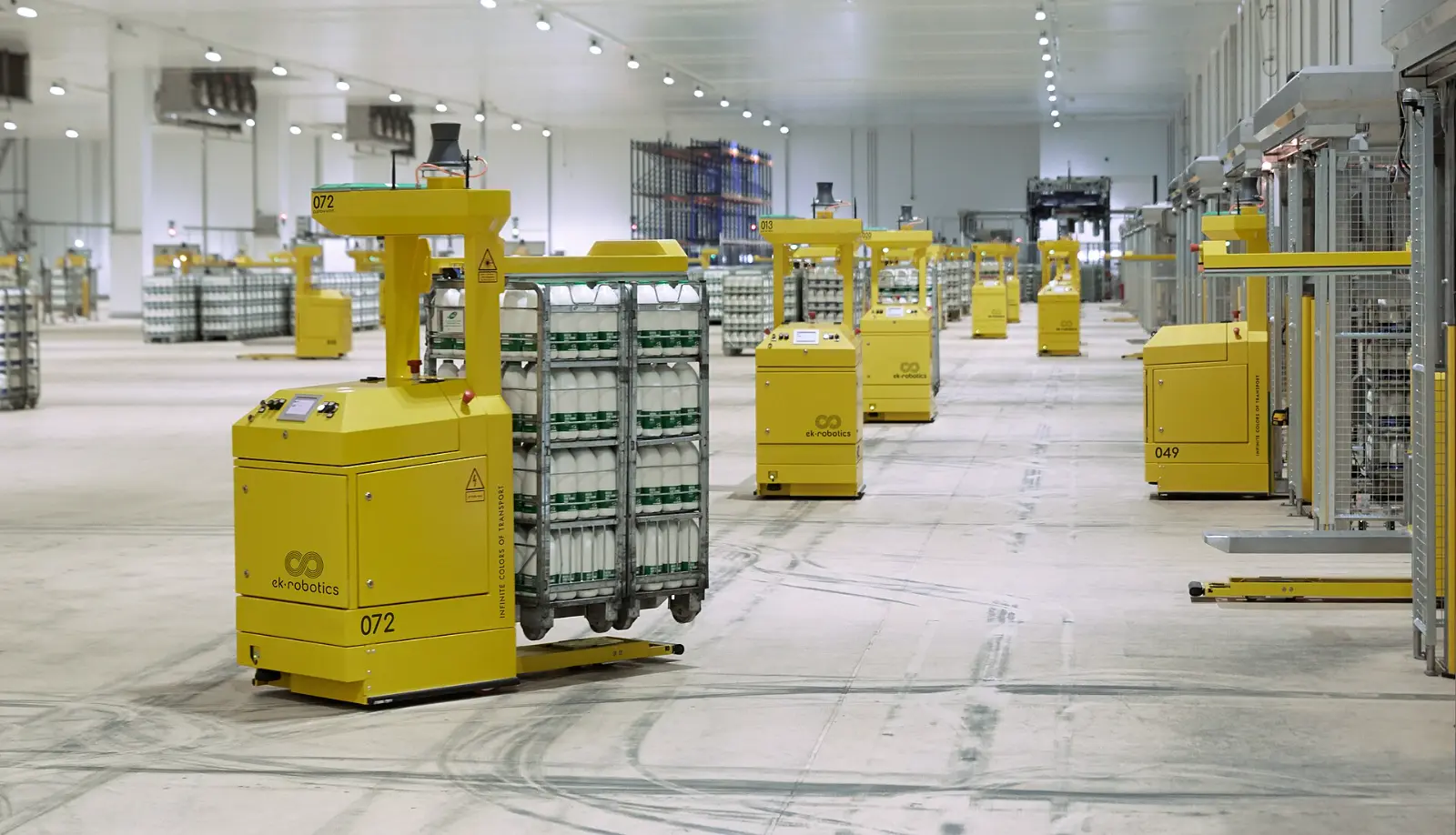
At Exotec, the French leader in warehouse robotics, the teams and the partner integrators that deploy the sites work in Koddex every day. The gains measured bear precisely on the repetitive tasks that weigh on engineers.
- 2 h / day
- returned to each integrator on documentation and information search
- −50 %
- of time on the engineers' repetitive tasks
- ≈ 1,000
- people at Exotec and its partners work in Koddex
−50 % and −30 %: ranges observed on guided deployments, not an audited average. The other figures are counted at Exotec.
Connected to your tools
Koddex plugs into the CAD, the PDM or PLM, the ERP, Jira, Excel and Drive. No migration, no retyping: the platform links what already exists and adds the traceability layer that was missing between the project as sold and the system shipped. Data is hosted in Europe, with rights per role and per partner.