Events
Can Europe reindustrialise with someone else's engineering tools? Stéphane Di Costanzo at SIANE 2026
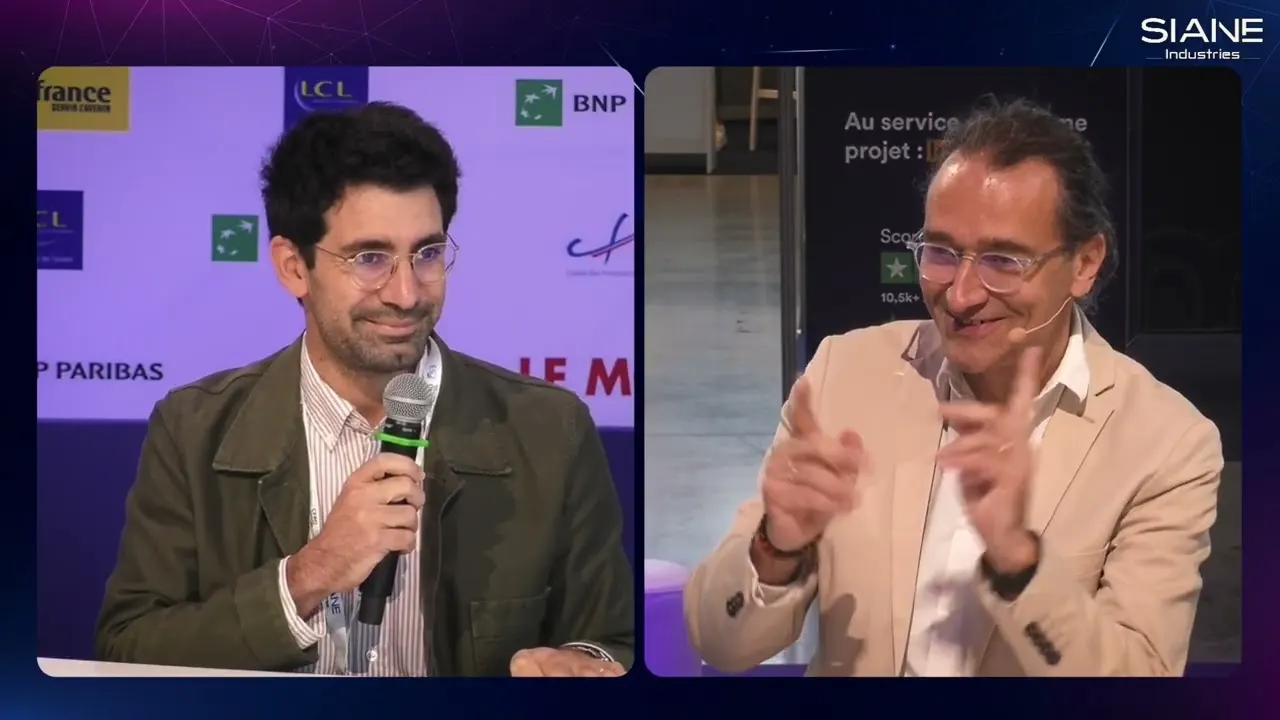
"Reindustrialisation" was the word on everyone's lips at SIANE, the industry show held at MEETT in Toulouse from 13 to 15 October 2026. On the show's TV set, the question was put plainly: Europe wants to reindustrialise, but does it have the means? Or is it bound to rebuild its industry with tools and products made elsewhere, starting with the United States?
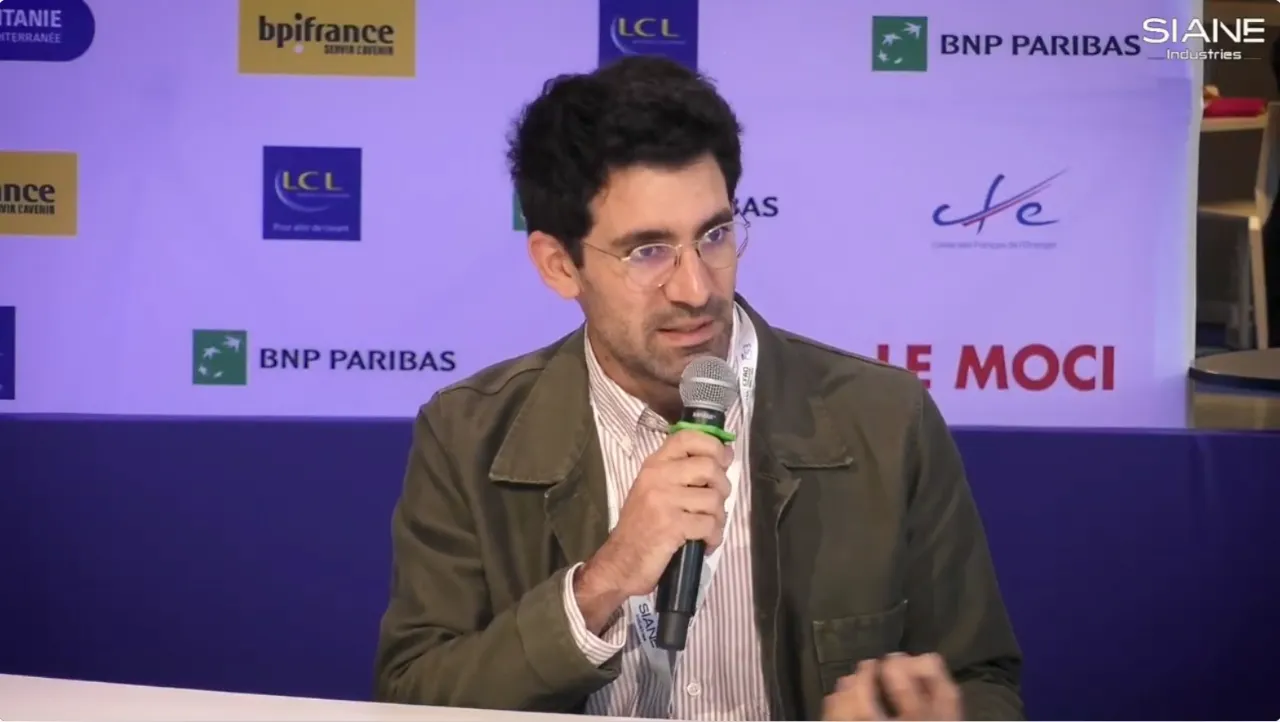
Stéphane Di Costanzo, co-founder and CEO of Koddex, came on set to answer it. Here is what he said, and what it means for the teams that design complex hardware.
Fifteen years building tools for product teams
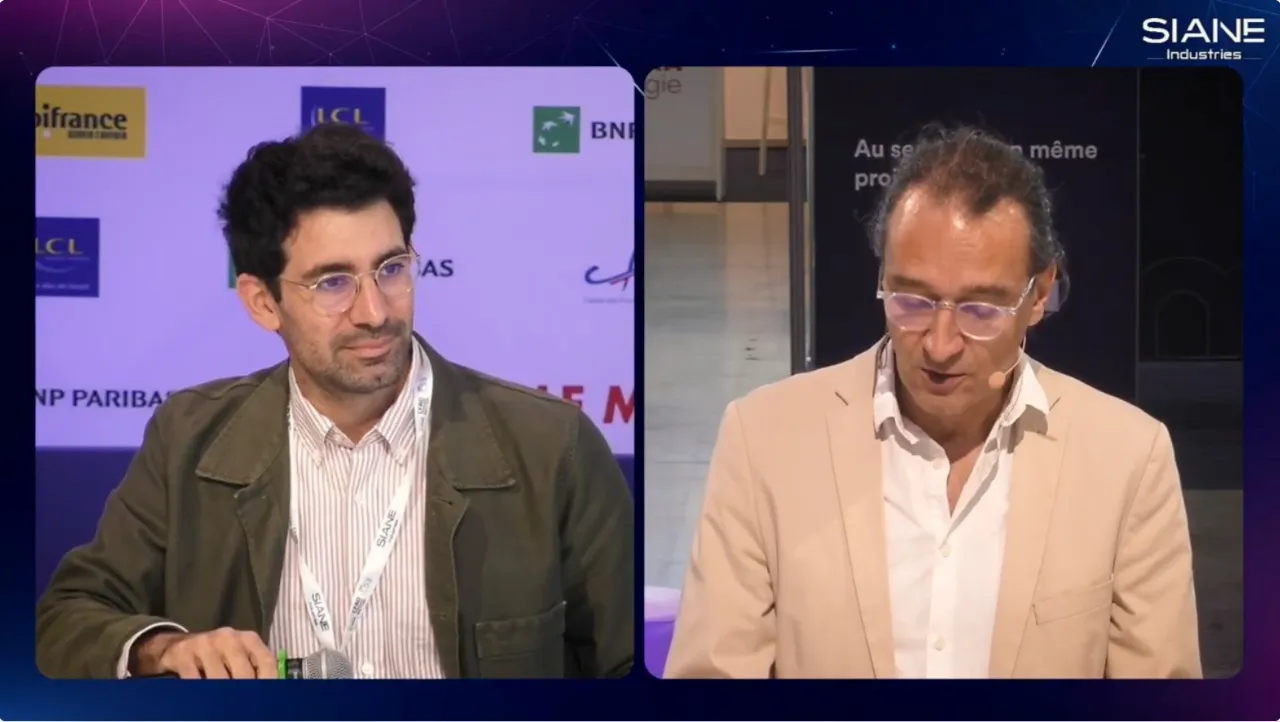
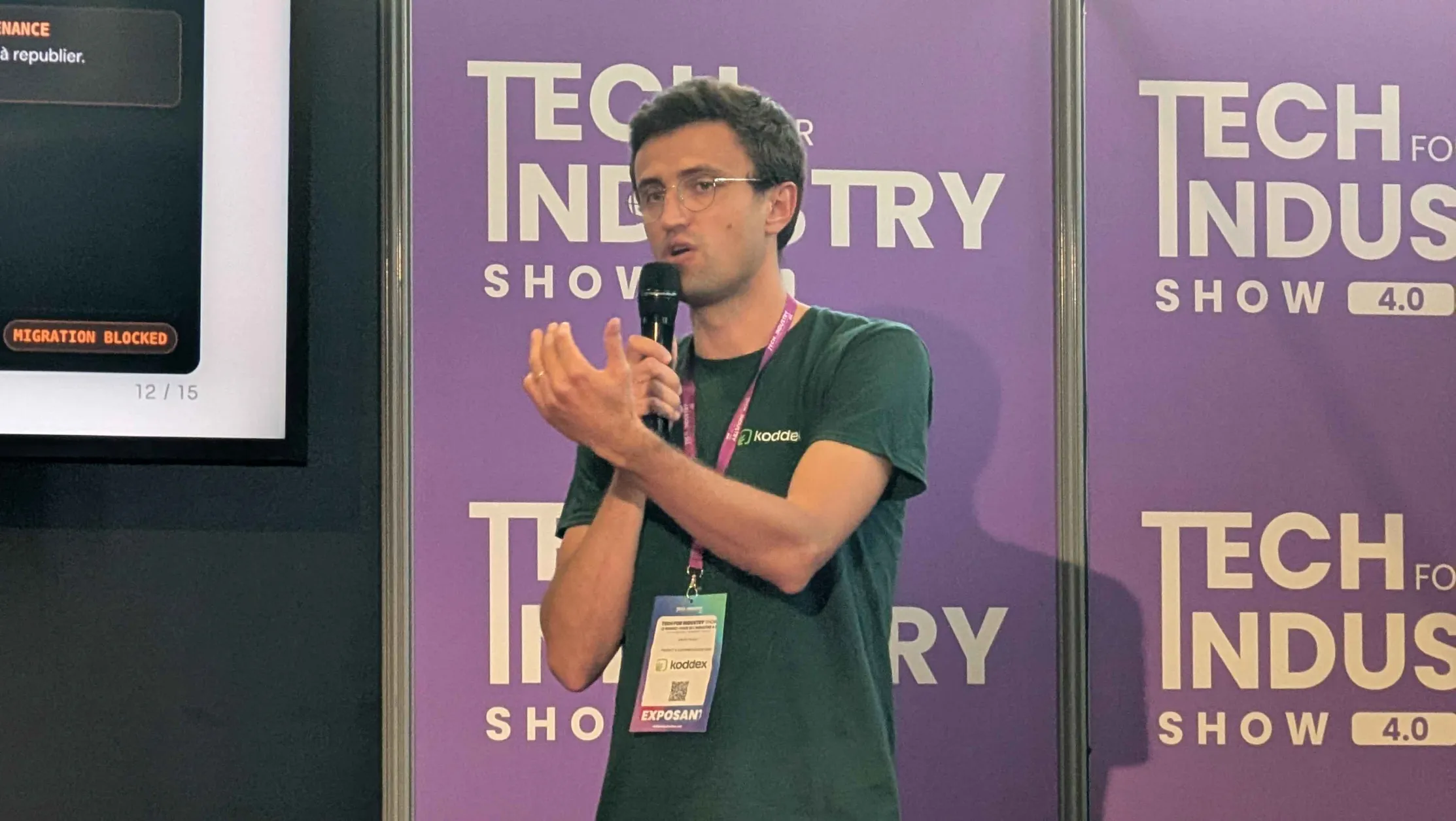
Stéphane is a software engineer by training. For fifteen years, he built digital tools for the teams that design products.
"First in retail, for textile, sports and tooling products, at Kiabi, Decathlon and Leroy Merlin, where I helped these teams design their products, build them and make them viable to sell," he recalled. "Then I moved into industry, and into robotics, at Exotec, which builds the systems that robotise companies' operations."
The need nobody was covering
What he saw along the way was a gap. Every team building a product needs precise information that stays continuous from the first idea to the delivered product. In industry, that continuity carries more weight than anywhere else.
"We always start from a user need and turn it into a viable solution," he explained. "In industry, you face a very demanding regulatory framework. A specific need has to be projected into technical specifications, within a legal frame of certifications, regulations, and operational processes you can or cannot deliver. All of that information must be traced end to end."
The cost of missing that trace is concrete. "An error made at the start of the chain and only found at the end slows iteration cycles enormously, and can put the launch of the product at risk."
NASA measured the same effect on its own programmes: the later a requirements error is found, the more it costs to fix.
Relative cost of fixing a requirements error
Disciplines work in silos, and their data does too
The root cause, for Stéphane, is not the people. It is how their work is organised. "Every discipline works in a silo. Each one has a very specific, very sharp job, with tools built for it. Those tools create data, but that data struggles to talk to the rest, so nobody gets a 360-degree view of the product."
 Product · graph
That is the problem Koddex was founded to solve, in Lille, in 2024. "Our mission is to help engineering teams cut the time it takes to design and ship their products, above all complex physical systems in regulated industries."
A digital twin of the product, with its context
The answer is a platform that acts as a digital twin of the product: not a copy of the CAD, but the product's information and everything around it.
"You find all the information about the product and its whole context," Stéphane said. "Why it was created. Which standards it must meet. Where it stands in development. Which components use it. Where it has been deployed, and at which customer."
- Why was it created?
- Which standards must it meet?
- Where is it in development?
- Which components use it?
- Where is it deployed?
- At which customer?
All of it lives in an information graph, where every piece of data keeps its context: what it is, and why it is there. Two things follow from that.
First, engineers from every discipline work on one common source of truth, instead of reconciling files between departments that, as the host put it, do not speak the same language.
Second, they can work with autonomous AI agents. "That context matters enormously to the agents," Stéphane pointed out. An agent that knows why a requirement exists and which test proves it can prepare real engineering work instead of guessing. The agent does the work, the engineer keeps the decision, and every action is traced.
Why this answers the reindustrialisation question
The set asked whether Europe can reindustrialise with tools from elsewhere. Stéphane's answer shifts the question. What decides how fast an industrial company moves is not only the tools it buys. It is whether the data those tools produce is traced, shared and interoperable.
Each discipline keeps its own tools; what changes is that their data finally connects. That is what lets a team iterate without losing the thread, and prove compliance without rebuilding the file by hand at the end.
€3M to go further
A few days before SIANE, on 12 October 2026, Koddex announced a €3 million seed round led by Breega, with Exotec taking part. Exotec, one of the first companies to run its engineering on Koddex, with more than 1,000 licences, is now also an investor.
The round funds three things: a stronger team, more integrations with the engineering software industrial companies already use, and the next generation of AI agents. Commercially, it backs Koddex's growth in France and across Europe.
- A stronger team
- Integrations with industrial software
- AI agents
- Growth in France and Europe
What comes next
The direction is the one Stéphane described on set: one traced source of truth, and agents that work on it within the rights they are given.
In practice, that means agents that prepare a change's impact analysis, update the documentation and keep the compliance evidence current, triggered automatically by a CAD revision, a software release or a supplier document, and always validated by an engineer.
With the EU Machinery Regulation applying from 20 January 2027, and more products carrying software, the need Stéphane described in Toulouse is only growing: knowing, at any moment, what the product is, why it is that way, and whether it is compliant.
Quotes are translated from the French interview and lightly edited for reading. Watch the full interview above.