
Reference scenario
One thread, R&D to six sites
- 1
- live BOM, no exports
- 3
- continents on one baseline
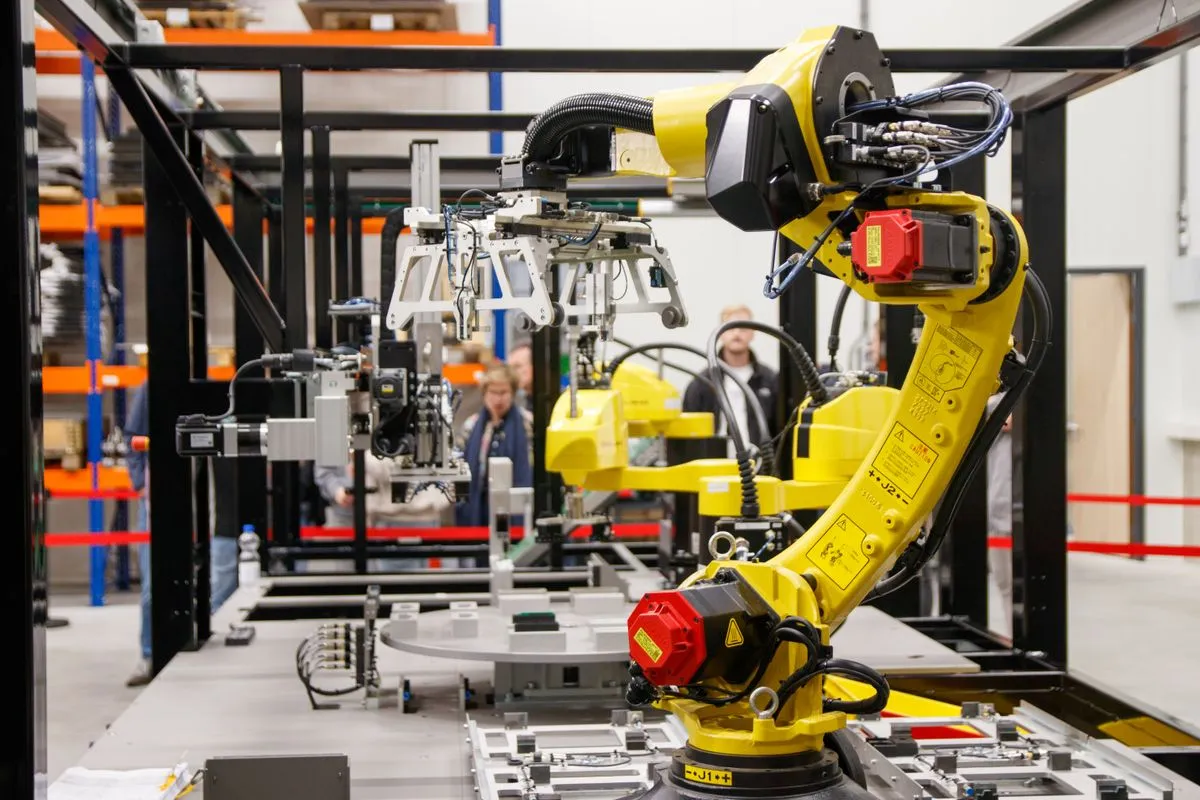
Robotics
Mechanical, electronic and firmware data sit in one model, from R&D to every deployed site. A defect reported in the field traces back to its requirement in seconds, and your partners work in the same model.
15 min
to assemble a complex product structure, instead of 2 to 3 days in Excel
300 000
objects migrated in 1 day
Measured at our reference customer after a year in use. Your first scope measures them on your own programme. Reference customer: Exotec, with more than 1,000 users and 20 partner organisations in Koddex.
Today
When a robot fails in the field, engineers rebuild by hand the link between the defect and its requirement.
With Koddex
Your team and your partners share one model. A field defect is traced to its part in seconds, and the next generation reuses the parts and requirements of the current one.
Several robot generations and variants share most of their parts.
Variants inherit the common parts, so a change to a shared part shows every variant and site it affects.
Mechanics, electronics and firmware evolve at different speeds.
All disciplines work in the same model, so a firmware change shows which hardware revisions it depends on.
Field returns rarely reach the engineering team.
Each defect is linked to its part, its requirement and its test, in seconds instead of days.
Partners design and build part of the robot.
Access rights are set per partner on the same model, so each partner works on its own part of the robot.
With Koddex agents
Assign a field return to an agent. It traces the defect to its part and requirement, opens the test to rerun and assigns it to the right engineer.
Teams that work with Koddex agents spend up to 50% less time on repetitive engineering tasks.
Reference scenario
Event
Booth E15, October 13 to 15. We run live demos on a real engineering project.
Bring one robot generation and one field return. In the demo, we show in Koddex how a field defect is traced back to its requirement.